
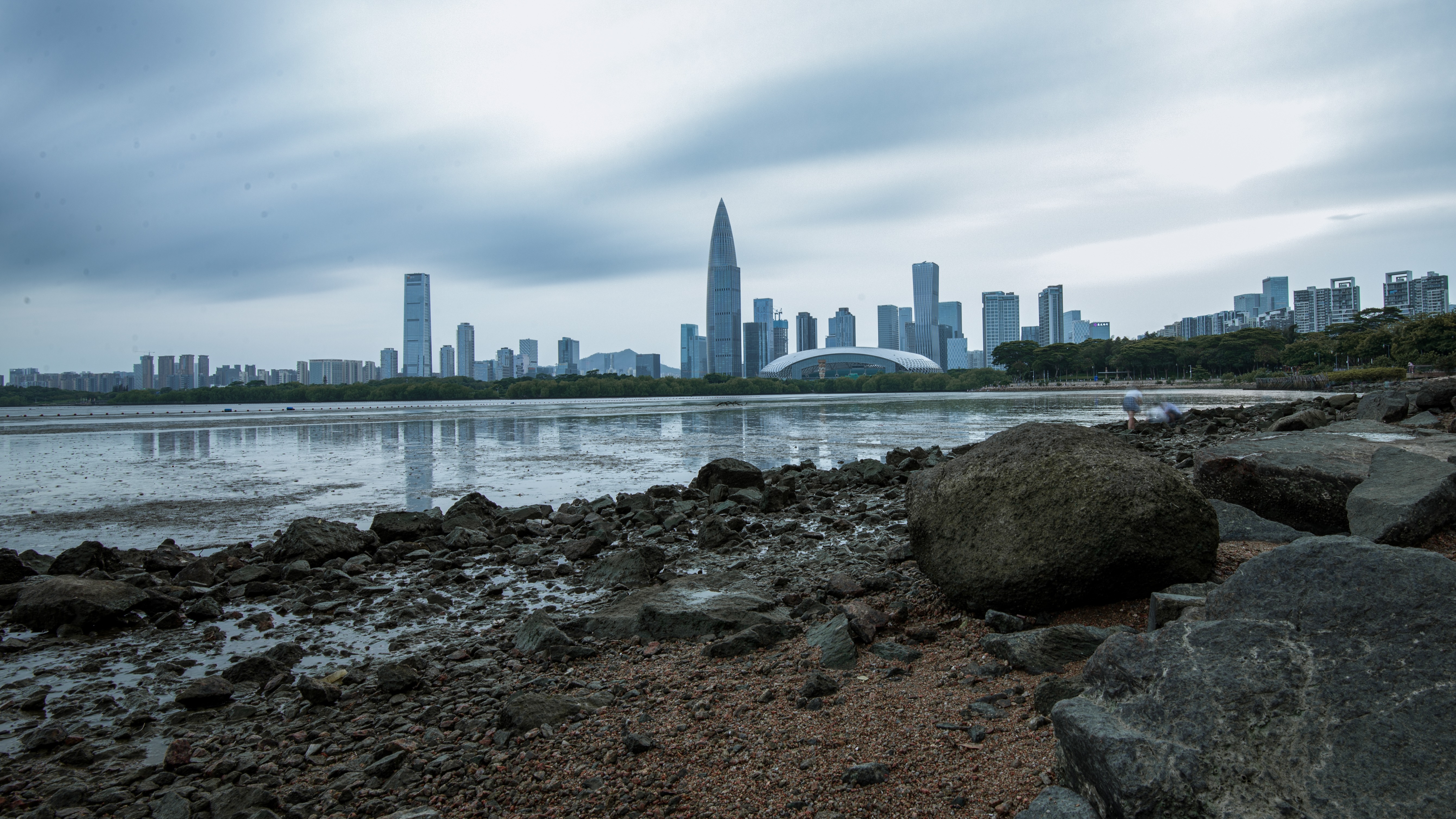
This landscape photograph presents a compelling visual dialogue between untamed coastal terrain and rapid urban development. The composition is anchored by a low-angle perspective that guides the viewer’s gaze from the textured, weathered boulders and exposed mudflats in the immediate foreground across a calm, reflective tidal zone toward the distant cityscape. Kingkey 100 emerges as a dominant vertical focal point, piercing the horizon and establishing a clear sense of scale against the surrounding glass-and-steel high-rises. The midground features a subtle band of coastal vegetation that acts as a natural buffer, reinforcing the spatial transition from wild shoreline to engineered metropolis.
Lighting plays a critical role in establishing the photograph’s atmospheric tone. Diffused illumination from a heavily overcast sky eliminates harsh shadows, producing an even, flat light that enhances surface details in both the dark, wet stones and the reflective water. This subdued lighting scheme contributes to a contemplative, slightly melancholic mood, evoking a quiet stillness that contrasts with the implied dynamism of the urban environment. The color palette is deliberately restrained, dominated by cool blue-grays, slate tones, and desaturated earthy hues. The lack of vibrant saturation unifies the frame, lending a cinematic, documentary aesthetic that emphasizes structural forms and environmental tension rather than decorative appeal.
The deliberate use of negative space in the sky contrasts sharply with the dense architectural cluster, creating a balanced yet dynamic visual weight. The reflective qualities of the shallow water introduce subtle tonal variations that prevent the foreground from appearing flat, while the layered depth of field ensures that both the geological textures and distant structural lines remain legible. By avoiding high-contrast lighting, the image relies on tonal gradation to model form, a technique that enhances the realism and documentary integrity of the scene. The overall execution demonstrates a sophisticated understanding of environmental photography, where natural elements and built infrastructure are framed not as opposing forces, but as interconnected components of a rapidly evolving coastal metropolis. This thoughtful framing captures the enduring dialogue between ecological resilience and architectural ambition.