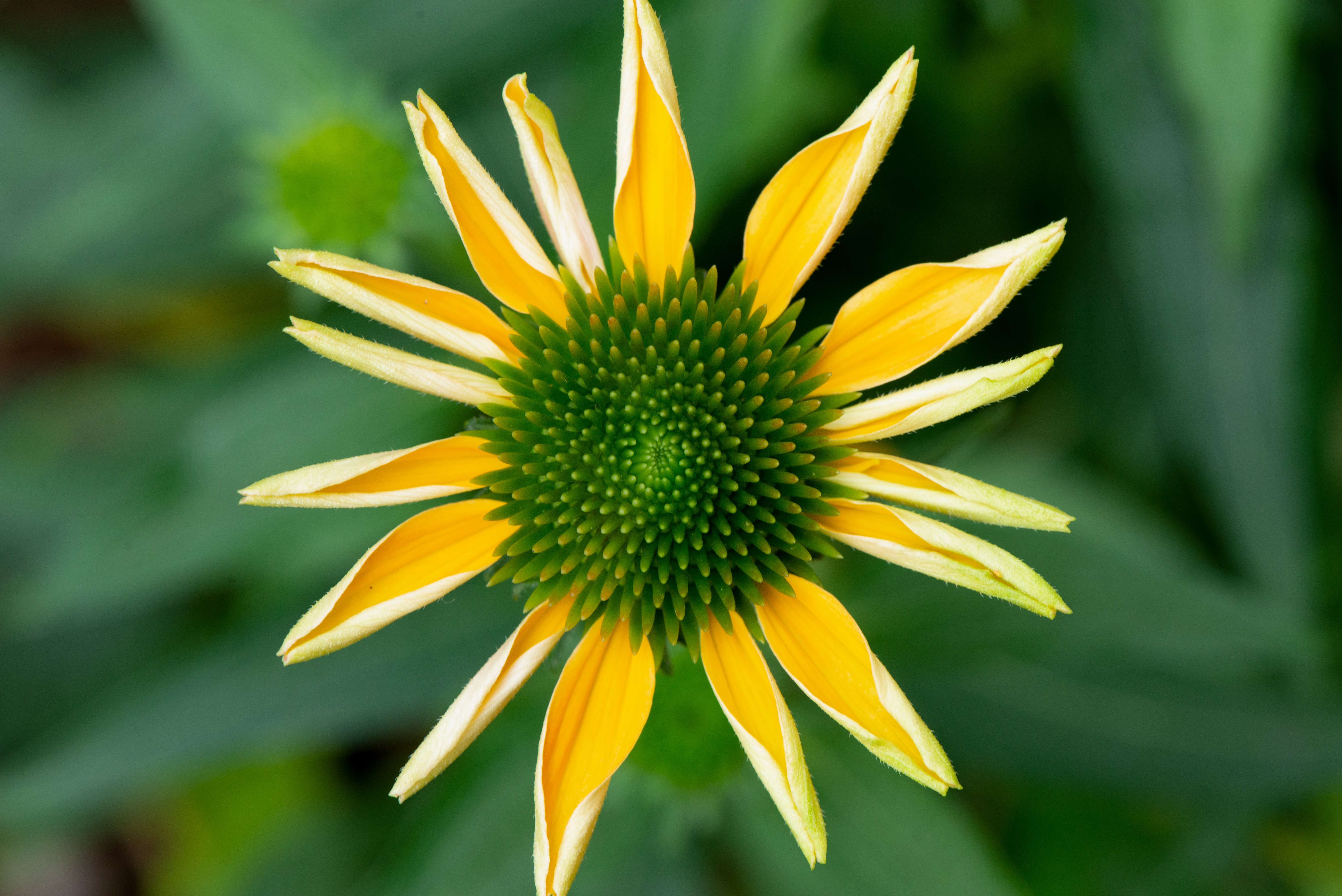
I still remember the quiet morning when I first knelt in the damp grass, my lens hovering just inches above the earth. The prairie was waking up, wrapped in a cool, overcast haze that diffused the sunlight into a soft, even glow. Right there, standing alone yet commanding the frame, was a single golden coneflower. I knew instantly that I had to capture its quiet geometry. I adjusted my tripod, lowered the camera to a strict overhead angle, and dialed in a wide aperture to isolate the bloom from the surrounding foliage. The result was a striking study in radial balance, where every slender petal curved upward like a sunbeam caught in slow motion. Shooting macro flowers in the wild is always a delicate negotiation between patience and precision. I waited for the slightest breeze to settle, then focused meticulously on the central cone. That spiky, geometric dome demanded absolute sharpness, while the creamy bokeh of the background melted the deep greens into a painterly wash. The lighting that day was a photographer’s dream; without harsh shadows to distract the eye, the natural translucency of the petals revealed subtle gradients, fading from vivid gold at the base to a pale, luminous cream at the tips. I often think about how plants like Echinacea carry centuries of ecological and cultural resilience, quietly thriving in these temperate meadows. Through the viewfinder, I wasn’t just documenting a flower; I was tracing a living pattern that has drawn pollinators and healers for generations. There is a profound stillness in macro work, a moment where the chaotic noise of the world falls away and only texture, light, and form remain. When I pressed the shutter, I felt a deep sense of harmony, as if the camera had finally learned to listen to the language of the soil. I hope this image invites you to pause, lean in closer, and find your own quiet reflection in the intricate architecture of nature. Every petal tells a story of survival and grace, waiting patiently to be seen by those willing to look.