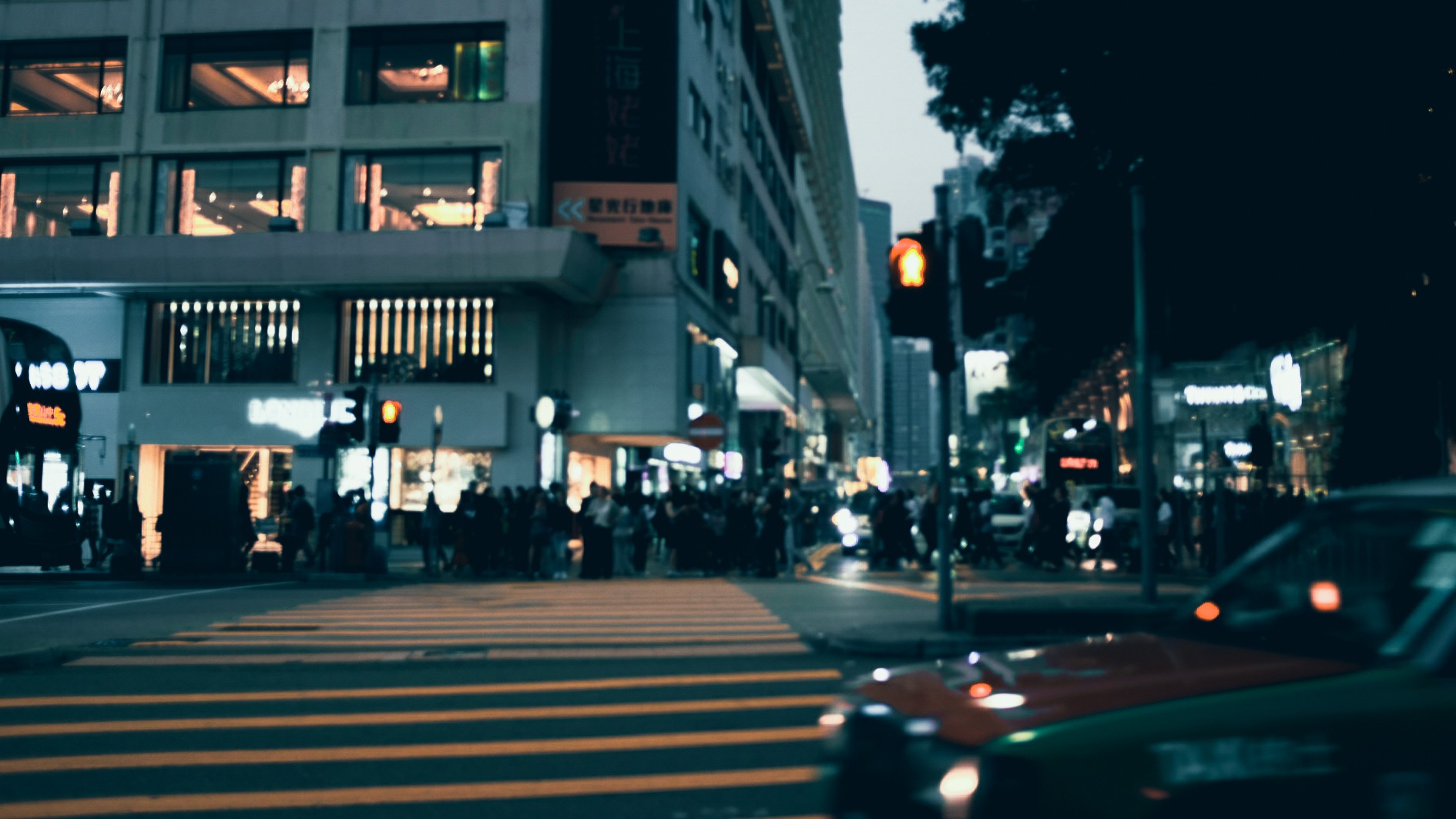
Standing at the edge of that bustling intersection, I felt the city exhale. The sun had just dipped below the skyline, leaving behind a soft gradient of blue-gray that slowly surrendered to the artificial glow of neon and streetlamps. I raised my camera, framing the wide pedestrian crosswalk as it sliced diagonally across the asphalt. The composition felt instinctive. I used the painted yellow stripes as leading lines, drawing the eye straight into the heart of the crowd waiting at the curb. A taxi blurred past in the lower right corner, its red taillight bleeding into the frame like a fleeting memory. I knew this was the moment. I adjusted my lens to a wide aperture, likely f/2.0, to create a shallow depth of field. This deliberate choice softened the chaotic foreground and background, isolating the silhouettes of pedestrians against the warm, glowing shop windows. The result was a quiet intimacy amid overwhelming motion. I paired that with a slightly slower shutter speed, letting the ambient light paint subtle trails while keeping the mid-ground sharp enough to feel alive. The mood shifted instantly from documentary to cinematic. There is a specific melancholy in twilight photography that I chase relentlessly. It captures the exact second when the day’s urgency meets the night’s calm. In Shanghai, this transition feels almost theatrical. The cool tones of the fading sky clash beautifully with the warm oranges spilling from modern glass storefronts, while the distant traffic signals pulse like a steady heartbeat. Shooting in low light always demands patience and trust in your gear, but it rewards you with raw, unfiltered atmosphere. I didn’t want a perfectly crisp, sterile cityscape. I wanted the grain, the blur, the sense of being exactly there as the metropolis shifted gears. When I reviewed the image later, I wasn’t just looking at a street scene. I was looking at a feeling. The quiet anticipation of strangers sharing a curb, the hum of distant engines, the fleeting nature of urban life. Every time I click the shutter in these conditions, I remind myself that photography isn’t about freezing time. It’s about holding onto the moments that slip through our fingers, preserving them in light and shadow before they vanish into the night. The architectural backdrop of mixed-use high-rises and vertical Chinese signage grounded the scene in its unmistakable Shanghai identity. I deliberately underexposed slightly to protect the highlights in the shop windows, then pulled back the shadows in post to reveal the subtle textures of the pavement. This balance between natural fading light and artificial illumination is what makes twilight so compelling. It forces you to slow down, to breathe with the rhythm of the city, and to let the lens become an extension of your own senses. Shooting in these conditions isn’t just about technical execution; it’s about emotional resonance. When I look back at this frame, I don’t just see a crosswalk. I feel the cool evening air, hear the muffled chatter, and remember the quiet beauty of everyday urban poetry.