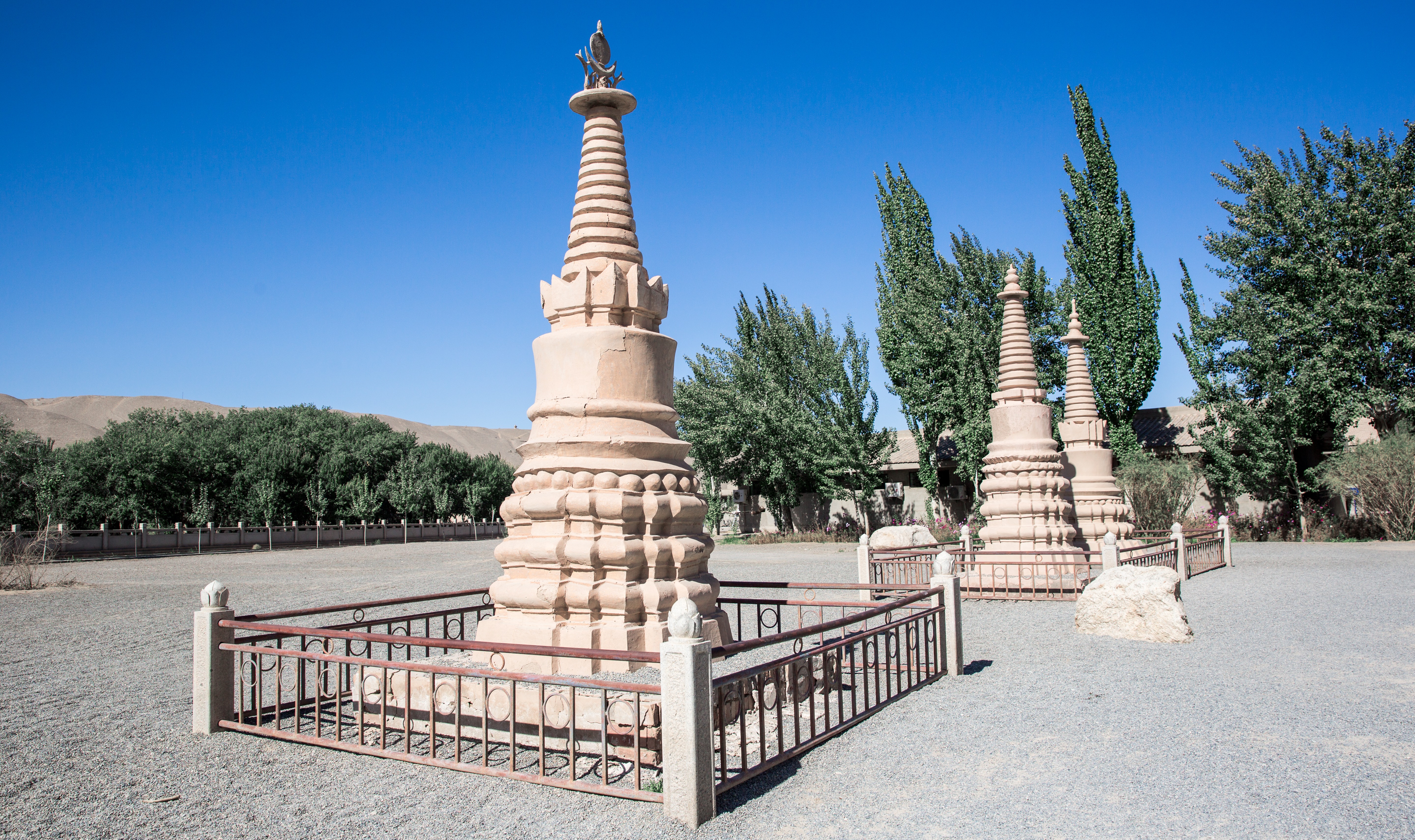
Standing in the center of that sun-baked courtyard, I felt the weight of centuries pressing gently against the dry desert air. The stupa rose before me like a silent sentinel, its fluted tiers catching the relentless midday sun. I deliberately chose to shoot with a wide-angle lens at eye level, wanting to ground the viewer in the same space I occupied. There is something profoundly grounding about placing your feet on the same coarse gravel that has supported pilgrims and monks for over a millennium. The harsh, directional light could have easily flattened the scene, but instead, it carved out every bead-like lotus petal and geometric motif along the base. I kept my aperture narrow to ensure a deep depth of field, allowing the rusted iron railing, the textured mud-brick, and the distant rolling hills to all share equal clarity. I adjusted my polarizer slightly to cut the glare off the sun-bleached surfaces, which helped the carved decorative elements pop against the flat horizon. As I composed the frame, I used the leading lines of the low fence and the gravel path to draw the eye straight to the central monument. The two smaller stupas in the background offered just enough symmetry to balance the weight of the foreground without stealing focus. In that moment of absolute stillness, the shutter click felt less like taking a photo and more like preserving a breath. The landscape demanded patience, and I gave it mine. When you strip away modern distractions, what remains is pure geometry, ancient faith, and the quiet hum of history. I hope this image invites you to step into that arid courtyard, feel the heat on your shoulders, and listen to the silence that still echoes through these weathered walls. Every shadow cast by the stone posts tells a story of endurance, and I am merely the witness tasked with translating that stillness into light and shadow for you to carry forward.