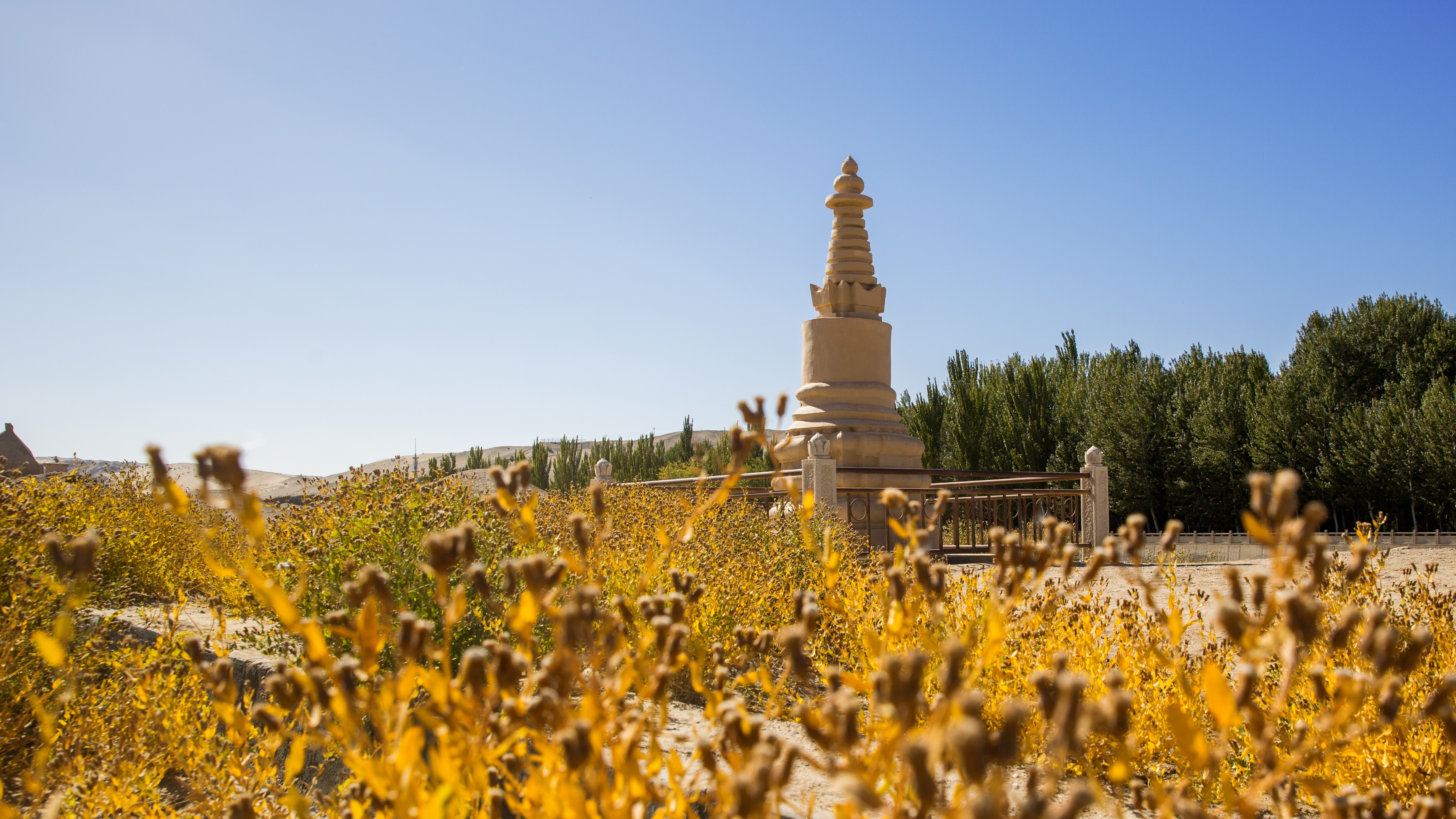
A beige Buddhist stupa rises against a clear blue sky in the arid Xinjiang desert, framed by soft foreground grasses.

Story

Standing before this ancient structure, I felt the weight of centuries pressing quietly against the desert wind. The stupa rose like a silent sentinel, its tiered, mud-brick form cutting a sharp silhouette against an endless, cloudless sky. I had traveled far into the arid expanses of western China, searching for moments where human devotion and harsh nature intersect without compromise. When I finally found this site, the light was unforgiving, pouring down in bright midday beams that flattened most shadows. Rather than fighting the sun, I embraced it. I positioned myself slightly to the left, allowing the composition to breathe, and set my lens to a wide aperture of f/4. This shallow depth of field transformed the dry, golden grasses in the foreground into a soft, painterly wash, naturally guiding the eye toward the crisp architectural lines of the monument. A low wooden fence anchored the base, hinting at the site’s protected status, while a distant line of resilient green trees whispered of hidden water and life. As I pressed the shutter, the silence of the plateau wrapped around me. There is a profound stillness in these forgotten corners of the Silk Road, a timeless quality that photography can only ever hint at. I waited for a subtle shift in the air, adjusted my exposure to preserve the pale beige textures of the stupa against the brilliant azure backdrop, and captured the frame. The resulting image is not just a record of geography; it is a meditation on endurance. Every crack in the brickwork, every sweeping curve of the conical tiers, speaks of generations who built toward the heavens in the middle of nowhere. Working with direct overhead light taught me to trust contrast and rely on compositional balance rather than dramatic shadows. By keeping the stupa slightly off-center, I created a visual dialogue between the man-made spire and the vast, untamed landscape surrounding it. Travel photography often demands patience, but moments like this reward you with a quiet kind of magic. The camera’s meter initially struggled with the high reflectivity of the pale stone, so I dialed in a slight negative exposure compensation to prevent the highlights from blowing out. This preserved the subtle gradations along the curved tiers. I hope this image invites you to pause, to feel the dry heat on your skin, and to listen to the ancient echoes carried on the wind.